Today, for the umpteenth time, I saw somebody comment, in mocking tones, that religion is wholly irrational, and I've finally reached a tipping point.
No, I'm not suddenly converted to some secure faith, comfortable that I have a place in the immortal realm. In fact, I'm probably less sure of my future than ever. But I will say, as a reasoning human being, that I find reality seems a mighty irrational, unreasoning thing.
Where is the logic, where is the reason in any life? From the moment life begins, it is doomed to end, likely to feed another doomed life. The merest cell, though, does everything it can to survive. It pushes itself through chaos, consuming others to become itself, sometimes to exist for only a few short minutes, sometimes for days, sometimes even longer, perhaps to transform itself into part of something even larger. Does it reason its existence? Does something else provide its reason? Reason, such as it is, tells us we are incapable of knowing the answer to the latter.
Life, itself, is without any apparent logic.
Out of seeming chaos, despite all logic, we live. Despite all reason, through that chaos, we choose to continue to live. Despite all reason, we find ways to enjoy the random nature of our existences. We find joy in our lives. We find laughter, or we make it. We make music. We make art. We make love. None of these things has even the remotest basis in logic, and yet, it is logical to pursue it all, because without it, there truly is no reason continue a life.
And so it is, for those who have faith. There is no logic behind the choice but that which says that to believe in an unseen force, a higher power, is to enhance one's existence in some way that defies reasoned language. This is not necessarily a bad thing in a human being. After all, it was those who believed in a Higher power who set themselves to the task of proving His laws. Those ambitious few established scientific method of inquiry, by which reason may be supported. And that scientific inquiry is what made modern technology possible, bringing joy by way of advanced medicine, travel, communication, diet, and so on, to many more who otherwise would have lived and died in misery.
Without the illogical mind, this would not exist
Neither would this
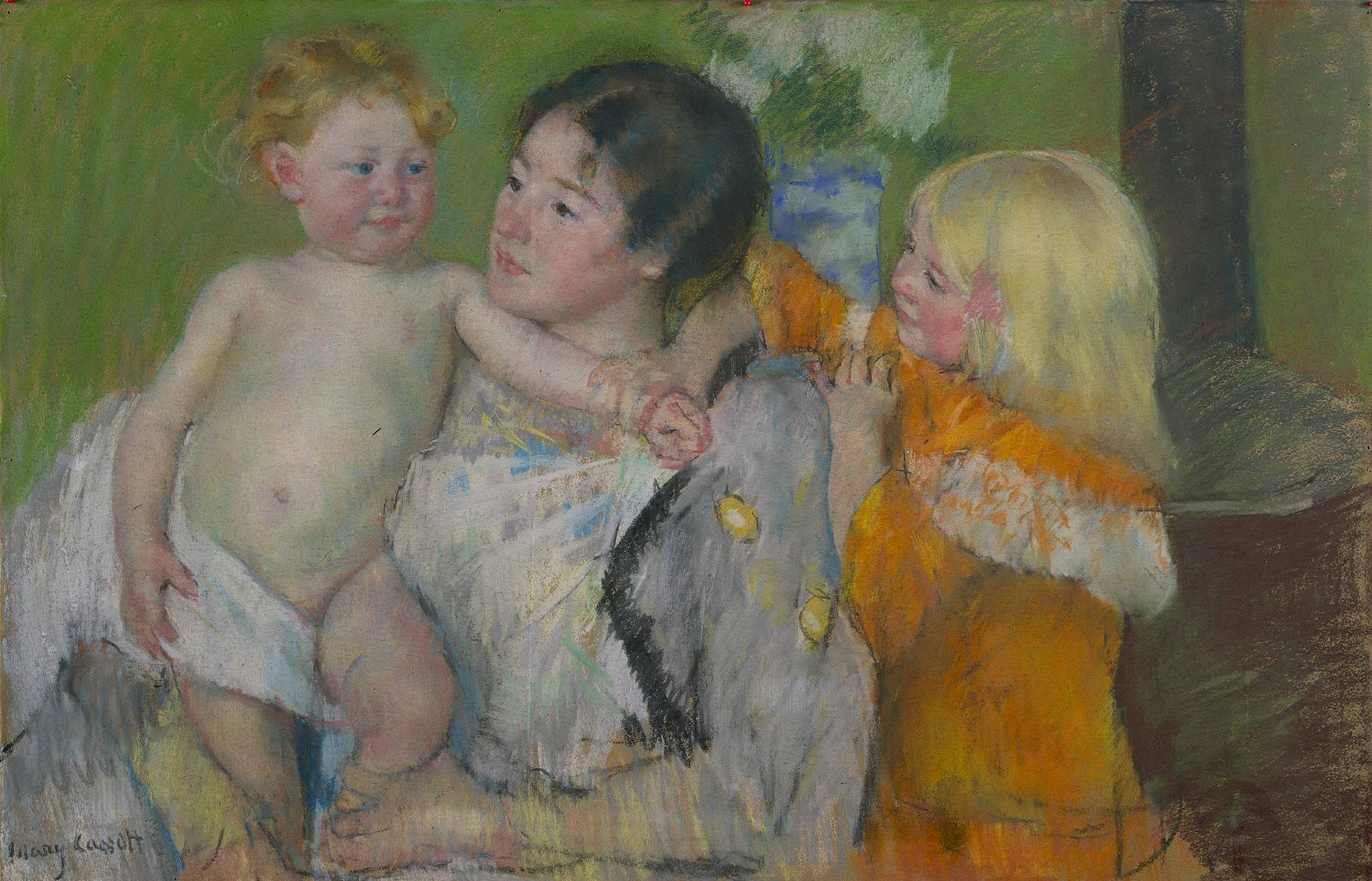
let alone this
and this.
So, believing in the unlikely has long had its place in society. A little lack of logic is not to be mocked. It's only reasonable.
Occasional political observations, occasional meanderings, occasional chairs and other mentally abused furniture
Showing posts with label religion. Show all posts
Tuesday, December 09, 2014
Wednesday, July 28, 2010
Question about the future of Ground Zero, NY
Monday, February 04, 2008
Lost and found cat stuff
As is my habit, of late, I followed a recommended link, which led me to another, which led me to this: The Lost Gnostic Gospel of Feline Mercy
In light of my having found this on a Sunday, followed immediately by this, I'm beginning to think some bunny-head is trying to send me a message, or something.
Saturday, April 28, 2007
Spiritus sanctus! Latin returning in liturgy!
The pope says he's down with the idea of Latin returning to Masses.
Personally, as an agnostic, I never quite understood the objection to it in the first place. It was a common denominator in Catholic services worldwide until shortly after I was born -- my older Catholic friends tell me they can still remember traveling, as children, and no matter where in the world their parents took them, they could participate in the regular and holiday mass, because it was always in the same language. Vatican II took that away.
Vernacular is useful for a lot of things, but there is something to be said for keeping a tradition. It unifies more than just the priests.
I noticed, too, in the Beeb's article & comments, how many people who were not Catholics (ahem, she said, looking the other way as angelically as she could) had comments on what was, essentially, none of their business. For example, this piece:
IMO, Latin is such a lovely language, it should be kept alive. I discovered that, back in my days at public school, struggling through the basic language classes (okay, I exaggerate. I hated it in high school, and didn't learn to enjoy it until much later, when I found out that the Romans didn't just write about military campaigns and politics and gods, but about sex and romance and sex and adventure and sex). What little of it remains after all these years still brings me pleasure (and not just when I'm trying to read Catullus). Perhaps it really does belong ringing off the walls of a great cathedral or two.
Ah, well. Maybe somebody will come up with a prayer in Latin for the agnostic children of athiest scientists who once were seminarians... and, maybe, somebody will hear it.
Personally, as an agnostic, I never quite understood the objection to it in the first place. It was a common denominator in Catholic services worldwide until shortly after I was born -- my older Catholic friends tell me they can still remember traveling, as children, and no matter where in the world their parents took them, they could participate in the regular and holiday mass, because it was always in the same language. Vatican II took that away.
Vernacular is useful for a lot of things, but there is something to be said for keeping a tradition. It unifies more than just the priests.
I noticed, too, in the Beeb's article & comments, how many people who were not Catholics (ahem, she said, looking the other way as angelically as she could) had comments on what was, essentially, none of their business. For example, this piece:
Concern is now focused on traditional mass's Good Friday liturgy which contains a prayer "For the conversion of the Jews". The prayer reads: "Let us pray also for the Jews, that the Lord our God may take the veil from their hearts and that they also may acknowledge our Lord Jesus Christ."To which, later in the article, came this:It refers to their "blindness" and prays for them to be "delivered from their darkness."
Rabbi David Rosen president of IJCIC, the International Jewish Committee that represents World Jewry in its relations with other world religions, says: "Any liturgy that presents Jews as being doomed in their faith doesn't present a very healthy attitude towards Judaism and the Jewish people."Well, don't pretty much all faiths say that about every other faith? The point behind whatever faith you have is that you are right, that the specific deity is with you, and (if it's a charitable sort of faith), your prayers are that the others you respect will soon discover the light your deity shines upon you, and join you under that lamp. It isn't supposed to be an exclusionary prayer, but one of hope. At least the good rabbi says he doesn't believe this will take the church back to antisemitism, and that this conservative move can have its own purpose:
"Conservative theology itself is not necessarily bad for relations with the Jewish people and even if Catholics believe their path is the absolute truth, that shouldn't contradict the ability to respect the integrity of others' identity and choice," he says.Three cheers for a man of faith agreeing that people of other faiths should be respected for their choice, and that, while one may have a conservative view within one's faith, it doesn't mean a lack of respect for others! Would that all others could see things the same way. Would that all others could have some respect (hear that, evangelical atheists?).
IMO, Latin is such a lovely language, it should be kept alive. I discovered that, back in my days at public school, struggling through the basic language classes (okay, I exaggerate. I hated it in high school, and didn't learn to enjoy it until much later, when I found out that the Romans didn't just write about military campaigns and politics and gods, but about sex and romance and sex and adventure and sex). What little of it remains after all these years still brings me pleasure (and not just when I'm trying to read Catullus). Perhaps it really does belong ringing off the walls of a great cathedral or two.
Ah, well. Maybe somebody will come up with a prayer in Latin for the agnostic children of athiest scientists who once were seminarians... and, maybe, somebody will hear it.
Monday, December 18, 2006
A coincidence?
In looking up an answer to a question somebody asked me yesterday, I not only found what I had been seeking, but I discovered something even more intriguing to me: the saint whose feast is on my birthday. According to AmericanCatholic.org, his name is Benedict Joseph Labre, and he is the patron saint of "Unmarried men (bachelors), rejects, mental illness, mentally ill people, insanity, beggars, hobos, the homeless" (this, according to Wikipedia) (and I added the emphasis, here).

Aside from the more obvious ties to me, there is another one, a stealth link. I have been collecting the tacky, kitschy St. Labre Indian School plastic figurines and other items, now, for a little over two decades. I have studiously avoided the jewelry, and stuck to the napkin holders, wall plaques, and dolls, because the cheap and vulgar pieces really do say a lot about the way people have, even in the recent past, seen Injuns. IMO the little plastic pieces of trash are an important piece of our history -- as important as the human detritus -- and almost equally deserving of preservation.
I'm only part Native American -- not quite close enough to the original bloodline to claim any real or binding tie. Pop is the last in this family to be able to have any legal status with any tribe -- and he can't find documents, anyway, since Great-Great-Grandma left the tribe (we are led to believe it was Iowa), converted to Christianity, and "became white", never to look back again. Any filial and tribal links were severed, deliberately and completely.
Still, my brother's sons are slightly more than 1/4 red by way of their (again, raised white) mother (for all their blond hair and blue-grey eyes), and deserve to understand that part of their heritage. It isn't all "noble savage" or NewAge "spirit guide" stuff. And there's a lot of cultural clash still happening just below the surface, occasionally rising to visibility.
Family members have indicated that they think I'm peculiar for collecting these crude artefacts. Well, actually, they just think I'm peculiar, and that the collection is one aspect of it. But most do want to avoid thinking about the embarrassing parts of our history. I want people to look closely at them. Not only do I have the St. Labre School trinkets, but I have gathered a veritable museum of illustrations,
dolls, plaster-of-Paris statuettes, and so on in which the Savage is depicted as less Noble and more "ugh". One of my friends compares it to her African-American auntie's collection of "Pickaninny Art" pieces.
We collect them to remind people that our history -- even recent history -- is full of ignorance, even when it's of the well-meaning variety.
I don't know enough about my own family to say, with an absolute certainty, where we were from. All I know is where I am from, and that my culture stems from a peculiar blend of mostly untraceable elements. And so, knowing little, I dig and scrounge and save what I can, so that others may have the opportunity to learn, to remember.
And I'm not Dee Brown. I don't pretend that every member of a minority in this land is therefore automatically a victim of somebody else's greed or malice. Also, I refuse to believe that there's anything inherent in an entire group of human beings who once peopled this continent to cause them to live in misery. Sometimes it just takes a while to adjust to a new day. I don't even believe that every failure of a tribal society is the fault of having been forced to live on a rez.
There's no room for pointing fingers and laying blame.
Still, neither do I believe that everybody must wholly assimilate in order to survive. You don't have to "become white" to get rid of historical humiliation. You just have to accept your own life for what it is, and do your damnedest to stand up for yourself.
Granted, I'm not much of a one to talk. I depend upon family to keep me from harming myself. But that's what family is supposed to do. They try to keep us sane.
window decal, still on its backing sheet
-- print registration was off, which is
why the image is blurred
Which brings me back to my St. Benedict Joseph Labre. He was a "Fool for Christ", a sacred clown, as it were. His madness was believed to bring him closer to a holy truth. It is not an easy path. Deeper truth does not rest alongside the clear and open thoroughfares.
And, that's why we keep collecting the evidence of our own weak foolishness. We make the path less even, less smooth, so others can scrape their knees, stumbling upon their own hidden truths.

Aside from the more obvious ties to me, there is another one, a stealth link. I have been collecting the tacky, kitschy St. Labre Indian School plastic figurines and other items, now, for a little over two decades. I have studiously avoided the jewelry, and stuck to the napkin holders, wall plaques, and dolls, because the cheap and vulgar pieces really do say a lot about the way people have, even in the recent past, seen Injuns. IMO the little plastic pieces of trash are an important piece of our history -- as important as the human detritus -- and almost equally deserving of preservation.
I'm only part Native American -- not quite close enough to the original bloodline to claim any real or binding tie. Pop is the last in this family to be able to have any legal status with any tribe -- and he can't find documents, anyway, since Great-Great-Grandma left the tribe (we are led to believe it was Iowa), converted to Christianity, and "became white", never to look back again. Any filial and tribal links were severed, deliberately and completely.
Still, my brother's sons are slightly more than 1/4 red by way of their (again, raised white) mother (for all their blond hair and blue-grey eyes), and deserve to understand that part of their heritage. It isn't all "noble savage" or NewAge "spirit guide" stuff. And there's a lot of cultural clash still happening just below the surface, occasionally rising to visibility.
Family members have indicated that they think I'm peculiar for collecting these crude artefacts. Well, actually, they just think I'm peculiar, and that the collection is one aspect of it. But most do want to avoid thinking about the embarrassing parts of our history. I want people to look closely at them. Not only do I have the St. Labre School trinkets, but I have gathered a veritable museum of illustrations,
dolls, plaster-of-Paris statuettes, and so on in which the Savage is depicted as less Noble and more "ugh". One of my friends compares it to her African-American auntie's collection of "Pickaninny Art" pieces.We collect them to remind people that our history -- even recent history -- is full of ignorance, even when it's of the well-meaning variety.
I don't know enough about my own family to say, with an absolute certainty, where we were from. All I know is where I am from, and that my culture stems from a peculiar blend of mostly untraceable elements. And so, knowing little, I dig and scrounge and save what I can, so that others may have the opportunity to learn, to remember.
And I'm not Dee Brown. I don't pretend that every member of a minority in this land is therefore automatically a victim of somebody else's greed or malice. Also, I refuse to believe that there's anything inherent in an entire group of human beings who once peopled this continent to cause them to live in misery. Sometimes it just takes a while to adjust to a new day. I don't even believe that every failure of a tribal society is the fault of having been forced to live on a rez.
There's no room for pointing fingers and laying blame.
Still, neither do I believe that everybody must wholly assimilate in order to survive. You don't have to "become white" to get rid of historical humiliation. You just have to accept your own life for what it is, and do your damnedest to stand up for yourself.
Granted, I'm not much of a one to talk. I depend upon family to keep me from harming myself. But that's what family is supposed to do. They try to keep us sane.

window decal, still on its backing sheet
-- print registration was off, which is
why the image is blurred
Which brings me back to my St. Benedict Joseph Labre. He was a "Fool for Christ", a sacred clown, as it were. His madness was believed to bring him closer to a holy truth. It is not an easy path. Deeper truth does not rest alongside the clear and open thoroughfares.
And, that's why we keep collecting the evidence of our own weak foolishness. We make the path less even, less smooth, so others can scrape their knees, stumbling upon their own hidden truths.
Monday, December 04, 2006
Episcopal Churches on the verge of separation
You say "liberal", I say "libertine" -- either way, it's "schism". And all over a gay woman bishop, it seems.
I' ve often wondered if some of the more liberal groups within a given church might not, deep in their heart of hearts, have a death wish for their church. Certainly the Catholic Church leadership (not just the popes -- take it almost all the way down to the local level) during the Renaissance could provide a fine example of what happens when the top becomes arrogant and assumes that, because it has the ear of the highest of the high deities, it can get away with anything. Yeah, that really worked with the selling of indulgences and the promoting of the sons of "celibate" priests, bishops, and popes to positions of political influence.
Can anybody say, "Martin Luther"?
In the years leading up to Luther's having (as the legend goes) nailed the 95 Theses to the church door, The Church had allowed its followers to comfort themselves with indulgences -- if a rich man sinned every day of his life, he didn't actually have to worry, because he could still buy his way into heaven. Repentance was not necessary, cessation of sin even less so. The Church made you feel good about having money, and so long as you sent enough of it in the right direction, that was all they asked for. Naturally, this chafed, a bit. Those who worked hard to earn the respect and love of their deity were treated like the son who had stayed home while the prodigal wandered. Where was their fatted calf?
Luther's final two treatises summed it up nicely for the masses (and the Masses):
So, half a millennium later, a major church -- one pretty much directly spawned by Luther's demand for recognition and strict adherence to the Gospels -- is on the brink of division over precisely the same issue, except that, this time, it isn't overtly about cash. It's about political clout, which brings its own indulgences. It's about feeling good about yourself regardless of what the Good Book says. But, it seems to me, the point of faith is not just to assume that, because I say I love Him, He will forgive my faults and love me back wholly.
True faith is about deeds, not words. If the Word of one's faith says, "go, and sin no more," I'd imagine the point is to do my dad-blamed best to avoid doing what raises the wrath of Him who told me that. Even though His wrath is ever slow to rise, I think it is probably not ready to abate, if I say, "sorry I stole a cookie," and then immediately dip my hand back into the cookie jar. (Knowing that my biggest sin is gluttony, I doubt I'd make a very good leader in faith. Peer counselor, maybe. Twelve-step partner, probably. But leader? Talk about the blind leading the blind!)
The point is, finding faith may be easy for most, but keeping that faith is hard work. Luther's protege, Philipp Melanchthon, I think, summed up the essence of what I learned from my Uncle Cecil (the best example of a true Christian Gentleman I can think of): "If I myself do not do my part, I can not expect anything from God in prayer."
I hope that each of the churches facing schism over the issue of liberalizing their houses learns those words, before they completely lose their identity, and certainly before they lose their true purpose.
I' ve often wondered if some of the more liberal groups within a given church might not, deep in their heart of hearts, have a death wish for their church. Certainly the Catholic Church leadership (not just the popes -- take it almost all the way down to the local level) during the Renaissance could provide a fine example of what happens when the top becomes arrogant and assumes that, because it has the ear of the highest of the high deities, it can get away with anything. Yeah, that really worked with the selling of indulgences and the promoting of the sons of "celibate" priests, bishops, and popes to positions of political influence.
Can anybody say, "Martin Luther"?
In the years leading up to Luther's having (as the legend goes) nailed the 95 Theses to the church door, The Church had allowed its followers to comfort themselves with indulgences -- if a rich man sinned every day of his life, he didn't actually have to worry, because he could still buy his way into heaven. Repentance was not necessary, cessation of sin even less so. The Church made you feel good about having money, and so long as you sent enough of it in the right direction, that was all they asked for. Naturally, this chafed, a bit. Those who worked hard to earn the respect and love of their deity were treated like the son who had stayed home while the prodigal wandered. Where was their fatted calf?
Luther's final two treatises summed it up nicely for the masses (and the Masses):
94. Christians are to be exhorted that they be diligent in following Christ, their Head, through penalties, deaths, and hell;No indulgences, no political sway with pope or banker or any such beats living according to the guidance of the Gospel... believe, and strive to follow the Scripture, not the latest fad at the altar.
95. And thus be confident of entering into heaven rather through many tribulations, than through the assurance of peace.
So, half a millennium later, a major church -- one pretty much directly spawned by Luther's demand for recognition and strict adherence to the Gospels -- is on the brink of division over precisely the same issue, except that, this time, it isn't overtly about cash. It's about political clout, which brings its own indulgences. It's about feeling good about yourself regardless of what the Good Book says. But, it seems to me, the point of faith is not just to assume that, because I say I love Him, He will forgive my faults and love me back wholly.
True faith is about deeds, not words. If the Word of one's faith says, "go, and sin no more," I'd imagine the point is to do my dad-blamed best to avoid doing what raises the wrath of Him who told me that. Even though His wrath is ever slow to rise, I think it is probably not ready to abate, if I say, "sorry I stole a cookie," and then immediately dip my hand back into the cookie jar. (Knowing that my biggest sin is gluttony, I doubt I'd make a very good leader in faith. Peer counselor, maybe. Twelve-step partner, probably. But leader? Talk about the blind leading the blind!)
The point is, finding faith may be easy for most, but keeping that faith is hard work. Luther's protege, Philipp Melanchthon, I think, summed up the essence of what I learned from my Uncle Cecil (the best example of a true Christian Gentleman I can think of): "If I myself do not do my part, I can not expect anything from God in prayer."
I hope that each of the churches facing schism over the issue of liberalizing their houses learns those words, before they completely lose their identity, and certainly before they lose their true purpose.
Tuesday, November 28, 2006
Upon whose holy book does one swear?
Dennis Prager's raised hackles regarding the swearing-in of Muslim congressman-to-be Keith Ellison is, in my view, misplaced. He seems to think that everybody who is sworn into office or under oath must use the Bible:
Prager defends his view, saying,aver affirm, and it was accepted. There is precedent for not doing what "every other American" does.
The point behind taking an oath on a holy book is that one is promising, "as the god I worship shall be my witness," the oath-taker will follow the words in the oath with honor. In other words, he's calling upon his deity to watch him, and to punish him if he does wrong by his promise.
Quite frankly, It'd be silly to have me swear on a bible, most days. I could easily raise my hand and say, "Upon all that I hold sacred and dear, I promise...", but a book of inspiring poetry doesn't put the fear of getting caught in bad behavior in any more menacing a light, to me. On the other hand, if I stood in front of my dad and said, "To you, Pop, I promise..." you can be assured my hindquarters would stay exactly in line.
It all depends upon where your priorities lie.
More importantly, both Prager and Ellison have problems. Prager is trying to impose a religious test upon the office. "Swear by our book or don't serve" is as bad as "leave your church or have no say in your own governance." Ellison, on the other hand, is tied to some rather dangerous radical, anti-American groups, such as CAIR, Nation of Islam, and the Democratic Party Leadership.
Two wrongs don't make anything except a Congressional precedent.
Update: Dammit, I should have known Eugene Volokh would be saying this better than I.
Insofar as a member of Congress taking an oath to serve America and uphold its values is concerned, America is interested in only one book, the Bible.Which version, Mr. Prager? RSV? NRSV? Oxford Annotated? New American Standard? KJV? Living Bible?
Prager defends his view, saying,
Of course, Ellison's defenders argue that Ellison is merely being honest; since he believes in the Koran and not in the Bible, he should be allowed, even encouraged, to put his hand on the book he believes in. But for all of American history, Jews elected to public office have taken their oath on the Bible, even though they do not believe in the New Testament, and the many secular elected officials have not believed in the Old Testament either. Yet those secular officials did not demand to take their oaths of office on, say, the collected works of Voltaire or on a volume of New York Times editorials, writings far more significant to some liberal members of Congress than the Bible. Nor has one Mormon official demanded to put his hand on the Book of Mormon.The question which begs asking is, how many of these others have asked for alternatives in the first place? As a point of fact (which Mom points out just now), during America's Colonial period and the first years of the Federal period, Quakers taking office didn't swear upon any book -- they chose to
The point behind taking an oath on a holy book is that one is promising, "as the god I worship shall be my witness," the oath-taker will follow the words in the oath with honor. In other words, he's calling upon his deity to watch him, and to punish him if he does wrong by his promise.
Quite frankly, It'd be silly to have me swear on a bible, most days. I could easily raise my hand and say, "Upon all that I hold sacred and dear, I promise...", but a book of inspiring poetry doesn't put the fear of getting caught in bad behavior in any more menacing a light, to me. On the other hand, if I stood in front of my dad and said, "To you, Pop, I promise..." you can be assured my hindquarters would stay exactly in line.
It all depends upon where your priorities lie.
More importantly, both Prager and Ellison have problems. Prager is trying to impose a religious test upon the office. "Swear by our book or don't serve" is as bad as "leave your church or have no say in your own governance." Ellison, on the other hand, is tied to some rather dangerous radical, anti-American groups, such as CAIR, Nation of Islam, and the Democratic Party Leadership.
Two wrongs don't make anything except a Congressional precedent.
Update: Dammit, I should have known Eugene Volokh would be saying this better than I.
Subscribe to:
Posts (Atom)


